
Hey confidence kings and queens!
The words “tweak” and “tweek” often confuse people because they sound exactly the same. However, only one spelling is correct in standard English.
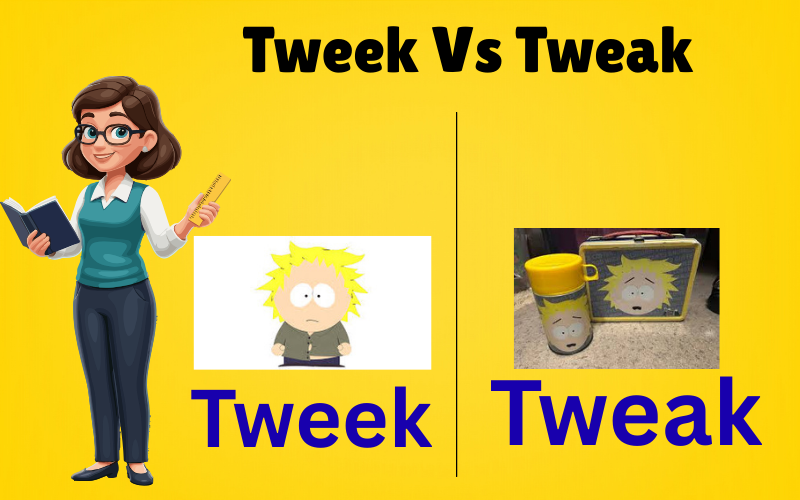
“Tweak” is the proper and widely accepted form, while “tweek” is usually a misspelling or informal variation.
Just like people search modern slang terms such as SYFM Meaning, CFS Meaning, What Does IK Mean?, or what does jk mean?, understanding correct spelling and usage is important for clear communication.
✅ Quick Answer
- “Tweak” = Correct spelling (means to adjust, fine-tune, or pinch)
- “Tweek” = Incorrect spelling (mostly a typo or pop culture reference)
📌 Summary
- Tweak is the correct English word
- Tweek is usually a mistake or informal usage
- Used in technology, writing, and everyday speech
- Also appears in slang contexts
- Important for clear and professional communication
Similar to understanding slang like What Does IK Mean? or what does jk mean?, knowing the correct spelling helps avoid confusion.
Etymology and Spellings
The word “tweak” dates back to the late 1500s:
- Derived from Middle English “twikken”
- Related to the word “twitch” (to pull sharply)
- Standard spelling has always been “tweak”
On the other hand, “tweek”:
- Is not recognized in major dictionaries
- Appears due to phonetic spelling confusion
- Sometimes used in pop culture
Just like misunderstandings happen with SYFM Meaning or CFS Meaning, spelling confusion often comes from how words sound.
Related Post: What Does JK Mean? Facts, Myths, Uses, Best Examples
Meanings and Usage
✅ Tweak (Correct Word)
1. Verb (adjustment):
To make small improvements
- Example: “I need to tweak my phone settings.”
2. Verb (physical action):
To pinch or twist
- Example: “He tweaked my arm jokingly.”
3. Noun:
A small change
- Example: “We made a few tweaks to the design.”
4. Slang:
To act agitated or overstimulated
- Example: “He’s been tweaking all night.”
❌ Tweek (Incorrect Word)
- Common misspelling of “tweak”
- Seen in social media or typing errors
- Known as a fictional name (South Park character)
Like confusion around What Does IK Mean? or what does jk mean?, informal usage can sometimes spread incorrect forms.
Historical Timeline
| Period | Development |
| 1500s–1600s | “Tweak” enters English language |
| 1900s | Gains meaning of “small adjustment” |
| 1960s+ | Slang meaning develops |
| 1990s–2000s | “Tweek” appears in pop culture |
| 2010s–present | “Tweek” spreads as typo online |
Myths and Misconceptions
| Myth | Reality |
| “Tweek” is correct | ❌ It is a misspelling |
| Double “e” changes pronunciation | ❌ Same pronunciation |
| “Tweek” is official slang | ❌ Not standard usage |
| Pop culture makes it valid | ❌ Still incorrect |
Misunderstandings like these are common, just as people often question SYFM Meaning or CFS Meaning in online conversations.
Key Differences Table
| Aspect | Tweak | Tweek |
| Correct Spelling | ✅ Yes | ❌ No |
| Dictionary Status | Official word | Not recognized |
| Meaning | Adjust, improve | Typo or name |
| Usage | Formal & informal | Informal only |
| Common Context | Tech, writing, speech | Social media errors |
Why This Matters
Correct spelling improves:
- Clarity in communication
- Professional writing
- Understanding in digital content
Today, people often search meanings like:
In the same way, knowing the correct form of “tweak” helps avoid confusion and mistakes.
FAQs
Which is correct: tweak or tweek?
“Tweak” is correct. “Tweek” is a misspelling.
Does “tweek” have any meaning?
Not officially. It is mostly a typo or a fictional name.
Why do people write “tweek”?
Because of pronunciation confusion and fast typing.
Conclusion
The difference between “tweak” and “tweek” is simple:
- Tweak = Correct and widely accepted
- Tweek = Incorrect or informal
Using the correct spelling ensures your writing remains clear, accurate, and professional.
Just as people try to understand slang like SYFM Meaning, CFS Meaning, What Does IK Mean?, and what does jk mean?, it’s equally important to use proper spelling in everyday language.
VIEW ALSO: PUNSCRACK.COM