
Hey confidence kings and queens!
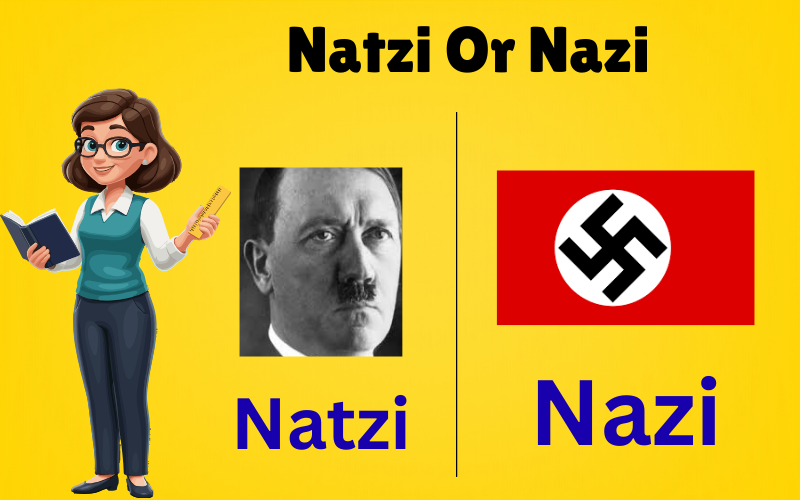
The term “Nazi” (sometimes misspelled as “Natzi”) refers to members and the ideology of the National Socialist German Workers’ Party (NSDAP). This political movement ruled Germany from 1933 to 1945 under Adolf Hitler and played a major role in World War II and the Holocaust.
While many people today search modern slang like DTTM Meaning in Text, understanding historical terms like “Nazi” requires deeper context, as it represents one of the darkest periods in human history.
✅ Quick Answer
“Nazi” means a member or supporter of the National Socialist German Workers’ Party (NSDAP), associated with Adolf Hitler’s rule, dictatorship, World War II, and genocide.
📌 Summary
- Nazi = Short form of Nationalsozialist
- Refers to Hitler’s political movement
- Responsible for World War II and the Holocaust
- Based on racism, nationalism, and dictatorship
- Strongly condemned today
Just like people look up What Does WSG Mean or HY Meaning In Text, understanding important terms depends on context—but historical terms carry far greater significance.
Etymology and Meaning
The word “Nazi” comes from the German word “Nationalsozialist”, meaning National Socialist.
- Originally used as a shortened slang term
- Often used by opponents in a negative way
- Later became the standard global term
Today, the word refers not only to individuals but also to the ideology and regime. Similar to how phrases like DTTM Meaning in Text are simplified forms of longer expressions, “Nazi” is also a shortened form with deeper meaning.
Related Post: HY Meaning In Text, Uses, Myths, Facts, All Info, Bio/Wiki Tables
Origins of Nazism
Nazism began after World War I during a time of crisis in Germany.
Key causes:
- Harsh Treaty of Versailles conditions
- Economic collapse and unemployment
- The Great Depression
The movement started as the German Workers’ Party (DAP) in 1919. Adolf Hitler joined shortly after and became its leader.
As with modern searches like What Does WSG Mean, where people try to understand communication trends, people in that era were influenced by propaganda and political messaging.
Historical Timeline
| Year | Event |
| 1919 | German Workers’ Party founded |
| 1920 | Renamed NSDAP |
| 1923 | Beer Hall Putsch |
| 1925 | Mein Kampf published |
| 1933 | Hitler becomes Chancellor |
| 1934 | Hitler becomes Führer |
| 1939 | World War II begins |
| 1945 | Nazi Germany falls |
Ideology and Core Beliefs
Nazism was based on extreme ideas:
- Racial superiority
- Anti-Semitism
- Absolute leadership (Führerprinzip)
- Territorial expansion (Lebensraum)
- Total government control
Unlike what the name suggests, Nazism was not true socialism.
In the same way people today try to understand meanings like HY Meaning In Text, it’s important to understand that names don’t always reflect true meaning—especially in political ideologies.
The Nazi Regime (1933–1945)
After gaining power, the Nazis turned Germany into a dictatorship:
- Political opposition was eliminated
- Media was controlled
- Citizens were heavily monitored
- Freedom was restricted
Propaganda played a major role in shaping public opinion, similar to how information spreads today when people search topics like DTTM Meaning in Text to understand communication trends.
The Holocaust
The Holocaust was the systematic killing of millions of people.
Victims:
- Around 6 million Jews
- Roma people
- Disabled individuals
- Political opponents
Methods:
- Ghettos
- Forced labor camps
- Mass executions
- Gas chambers
Understanding such historical tragedies is far more critical than everyday searches like What Does WSG Mean, as it reflects real human consequences.
Symbols and Propaganda
The Nazis used strong visual and psychological tools:
- Swastika symbol
- Controlled media
- Youth indoctrination programs
These methods helped spread their ideology across society.
Myths vs Facts
| Myth | Reality |
| Nazis were all blond | Many leaders were not |
| Hitler snubbed Jesse Owens | No clear proof |
| Nazis were socialist | They opposed socialism |
| Hitler escaped | He died in 1945 |
| Nazis were anti-religion | They controlled religion |
Key Facts Table
| Category | Details |
| Jewish Victims | ~6 million |
| Total Victims | 11–17 million |
| WWII Deaths | 70–85 million |
| Nazi Members | 8+ million |
| Camps | 44,000+ |
Why This Topic Matters
Today, people frequently search meanings like:
FAQs
What does “Nazi” mean?
It refers to a member of the National Socialist German Workers’ Party.
Was Nazism socialism?
No, it focused on nationalism and racial hierarchy.
How did Nazis rise to power?
Through economic crisis, propaganda, and political strategy.
Conclusion
Nazism represents one of the darkest chapters in history. It led to war, genocide, and immense suffering.
While modern users search terms like DTTM Meaning in Text, What Does WSG Mean, and HY Meaning In Text, understanding historical terms is equally important to ensure such ideologies never return.
VIEW ALSO: PUNSCRACK.COM